Showing posts with label Episcopal Church. Show all posts

A Reflection for Thursday, Lent 1, Year C

A depiction of 'Christian' fromm John Bunyan's Pligrim's Progress


"Strengthen us, O Lord, 
by your grace, 
that in your might we may overcome all spiritual enemies, 
and with pure hearts serve you; 
through Jesus Christ our Lord, 
who lives and reigns with you and the Holy Spirit, 
one God, 
for ever and ever. 
Amen." 

The collect above is proscribed for the Thursday of Lent 1 by the Episcopal Church's book, Holy Women, Holy Men (p. 39). 

For reflection: In the ancient martial classic, The Art of War, Sun Tzu said "Know your enemy" (Ch. 3, last sentence). What spiritual enemies are opposing your life in Christ? How about the spiritual enemies your Christian community or Church faces? Name them. How may we face those enemies with God's grace and might, yet maintain a 'pure heart' in service to God? 

Read, reflect on, and pray Psalm 35. 

The Bible and Episcopalians

Have you ever noticed that Episcopalians often speak differently about Scripture? (There. I've already done it. I said, "Scripture" and not "Bible." Why is it we say "Scripture" as often as we say "Bible"?) In chance encounters in coffee shops or on the street, I've encountered people who are confused at the ways Episcopalians use the Bible.

How come we don't memorize more of the Bible?
                        Why don't we have more expository preaching?
                                       How can you believe such&such when it clearly says this&that right here!

Sometimes the confusion leads to good, open conversation. Sometimes I've been verbally slapped around and condemned because I'm not in agreement. So let's take a look at ways in which Episcopalians might be just a bit different from some others.

Holy Scripture vs. Holy Bible - One reason we use the term "Scripture" so often (we say "Bible" also) is because the Bible itself never refers to itself as "Bible". The term Bible came from the Greek ta biblia, meaning "the books". And Scripture means "writings". Today, many Christians perceive the Bible as one book with one single author, namely God. However, the sense in both terms, Bible and Scripture, is plural. That is to say, early Christians recognized that the Holy Scriptures were not a single work, but a collection, a literary body with many parts and voices written during differing time periods in different cultural contexts with varying values and priories.    

A Choir vs. A Single Author - The diversity contained in the Books of the Bible doesn't typically trouble Episcopalians. Why? For one it reflects our experience of reality. The world is diverse and God made it that way. Second, we don't believe God authored Scripture. No. Seriously. God didn't sit down and pick up a pen and write this stuff down for us. Instead we believe that God inspired human authors to write it. Now, whatever "inspired" means, it's not the same as "dictated to". The Scriptures tell us that God seems to desire human partnership, not automatons. God + Adam = Eve. God + Moses = Ten Commandments. God + Mary = the Messiah is born. Take a look. God isn't afraid to partner with us. 

As a result, we don't expect the Bible to read as though it had only one author. It's not a solo performance; it's more like a choir. And if you have ever listened to jazz or modern classical you know that unison, harmony, and dissonance all have there proper place. And that in their proper place, they make for a wonderful, very expressive whole. The Bible is enriched as much by it's apparent dissonances as by it's moments of harmony and unison.  

St. Paul says... vs. First Corinthians says... - Episcopalians will often say St. Paul says this or St. John says that instead of quoting the book, chapter and verse. Why? First because the authors of Scripture were real people and because those people aren't strangers to us. We remember them in the Tradition of the Church and we know them by their presence within the Body of Christ.

Second, its because we often group the books of the Bible by their authors, recognizing common themes within those bodies and contrasts between works of different authors. This helps us understand some of the unity of Scripture in the midst of its diversity.   

Stories vs. Conclusions -  Finally, Episcopalians are more likely to talk about one of the stories from Acts or the Gospels, or speak of a metaphor like Paul's "Armor of God" or the "Body of Christ", or refer to visual images like those contained in Revelation. This we tend to do more often than referring to verses of exhortation like, "For all have sinned and fallen short of the Glory of God" (Rom. 2:23) and "believe on the Lord Jesus Christ and you will be saved" (Acts 16:31). Instead, we tend to use Scripture to open us up to what God has to say to us rather than to arrive at a formulaic conclusions and pat answers. We like to open doors and search for Holy Spirit's leading and are dubious about short quotations that don't convey the full context. And besides... stories are easier to memorize!    

A Conclusion
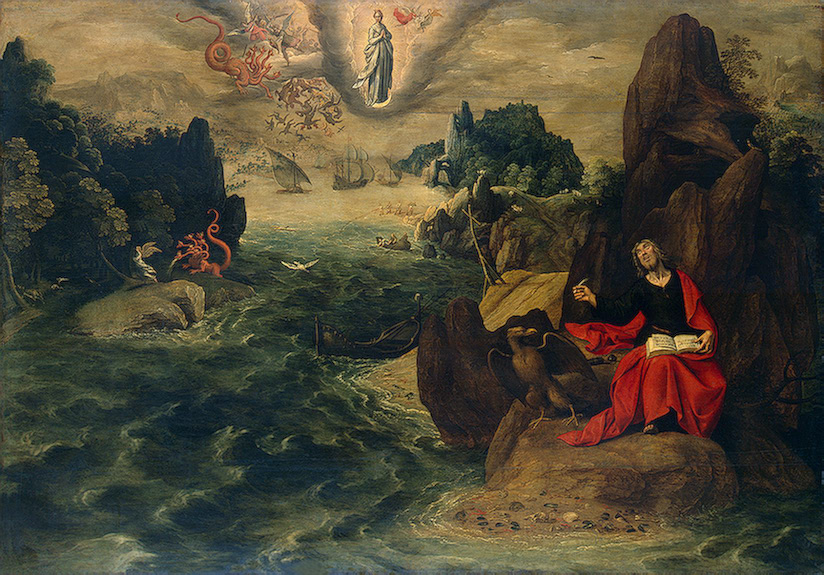
St. John depicted writing on the Isle of Patmos
All this isn't to say that other ways of quoting or reading or using the Holy Scriptures are bad or wrong. It isn't to say every Episcopalian does any or all of these things. It's just to say we frequently have a distinct way of encountering God in the Holy Bible. Sometimes that makes us seem different.  Sometimes that difference feels threatening to others. Hold your ground. Know your stuff. Seek to learn and create openness. Don't attempt to win a debate. Most of all, engage the Holy Scriptures. They are a "sure and certain means" of encountering God and uncovering "all things necessary for salvation."


The Demise of the Episcopal Church


Prologue
In his blog post "Reversing the Numerical Decline of the Episcopal Church", the Rev. George Clifford makes a prophetic call for turning around the declining membership of the Episcopal Church. Clifford accurately highlights the dismal stats and dim prognosis of TEC (The Episcopal Church) that has become all too familiar rhetoric for those of us Heaven-bent on renewal. He also gives a vision of hope. I commend the post to you. And I want to add my own observations.


Maundy Thursday
We are approaching Maundy Thursday when Jesus forms the community of the Church centered around the Passover, the commemoration of the first and greatest trauma that birthed the People of Israel - namely a story of trial, success, oppression, slavery, revolt, exodus, and rebirth.

We all wish wish to escape this. We want to go from "glory to glory" (II Cor. 3:18, KJV) and we pray "save us from the time of trial" (The Lord's Prayer, contemporary). But I don't think we in TEC will escape, nor should we.

I believe the Way of Resurrection is to be had in the Way of the Cross. I believe suffering and death, when borne in connection with doing God's will, leads to God's active re-creation of us. In terms of the TEC, parishes will decline and close. History, traditions and theologies may be abandoned (at least for a generation or ten). Our image and identity will change. We will lose much. But, in walking the way of the Cross we are also promised much!

Our Time is at Hand
I sometimes play a little mental game. If the house were on fire and I had only a few minutes to grab a few things (and all my family were safe) what would I take? Pictures? My computer? Memorabilia? Jewelry?  I think this is not a mental game for TEC. The house may not be on fire, but it is crumbling. Our time is at hand - not for the glory of worldly success, but for walking with Jesus the way of the Cross.

The house, our house, can no longer stand as it was once built. Parts will crumble. What will be saved? We can lose ourselves in trying to save the house or we can choose the few, most important things to keep. What does Christ call us to hold on to and what does Christ call us to let go of? The Cross looms in front of us.

Jesus faced very similar decisions on Maundy Thursday. His time was at hand. The Cross was looming in front of him. The disciples still didn't understand. What else could he say to get through to them? What else could he do? The house was coming down. There was precious little time. What are the essentials? What can be saved?

The answer we make together in TEC and how we determine that answer will determine our common future. My own recommendation is to follow Jesus' actions at the Last Supper and the Garden of Gethsemane. Whatever we do, I don't think we can take the option to run from the Cross, to escape "decline". If we run we might escape death for the moment, but will we gain the Resurrection? Will we be truly Christian?

For the TEC, it's time to own the Cross, to make Christ's Way, our Way, to be the People of the Cross that God might also make us the People of the Resurrection.


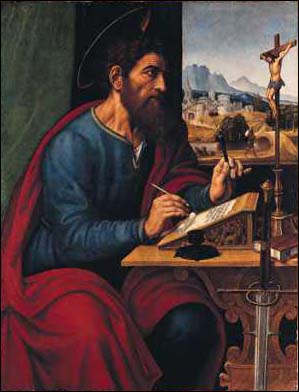


Homosexuality, a Parish, the Episcopal Church, & the Anglican Communion

From a Presbyterian friend and colleague: "I'm curious, if it's not too complicated to answer-- how does the current turmoil in the Anglican Church affect you and/or St. Peter's? - J."

Dear J.,

A good question that I'm happy to reply to. The simple answer is, "Not much," at least not yet. The Episcopal Church's decisions to move forward with the blessings of same-sex couples and allowing openly gay persons to become bishops hasn't impacted us hardly at all.

These are large decsions dealing with the overall direction of the Episcopal church over a long period of time. As a local parish we're very concerned with individuals, small groups, and shorter periods of time.   
The most imminent struggle and turmoil facing St. Peter's is both more mundane and more important, namely the day to day struggle to keep Christ central in our own lives. The temptation in times like these is to make whatever issue the Church is facing the focus of our activity, thoughts, emotions, and reflections. To give in to that temptation is, of course, idolatry. Christ alone should be the focal point of our lives, thoughts, and actions. The rest falls into place afterwards.

Someone might ask, "Isn't St. Peter's concerned with social justice" or "....concerned with morality or Biblical authority and fidelity to the Gospel?" Of course we are! However, as a small parish our approach is to take one person at a time. The joy of working on the local level is the ability to see a person for who they are, not what group they are affiliated with. Jane is Jane first, not primarily a conservative or a lesbian or a priest or a Japanese American. Jane is Jane, and we are interested in inviting Jane to a life of faith in Christ no matter what descriptors she may use for herself or others of her. 

Personally, I'm more concerned with the individuals being trampled in the dust by all the flag waving by both sides. I try not to worry about making the right call on the issues and worry about missing opportunities to make God's love known to those who are bruised and bleeding, regardless of what "camp" they're in.
Regardless of what decsions we make as a national church, we all remain sinners utterly dependent on God's grace to make us whole and "good people." We cannot save ourselves through righteous living or good legislation. Ultimately, even our best efforts are flawed. Once we realize how dependent we are (a very Calvanist thought, by the way), perhaps we can relax and take Martin Luther's advice: "Love God and do what you will."
Striving to keep Christ in the center, 

Fr. James+

Is the Book of Common Prayer Important?

The Book of Common Prayer (a.k.a. "the Prayer Book" or "the BCP") has, indeed, been a central part of Anglicanism since the Protestant Reformation (AD 1500's). It has been second only to the Bible in influencing Anglican (Episcopal) beliefs, morality, spirituality, ethics, and culture. One reason is that the Prayer Book was devised as an intricate recipe to bring various and seemingly contradictory factions into the union of worshiping God together. In the beginning these opposing factions were Protestanct and Roman Catholic. Later, other oposing factions emerged, such as Anglo-catholic and Evangelical. In these cases the Book of Common Prayer was instrumental in bringing about a Middle Way - a way of including both groups into one church.

Today we still have opposing perspectives: Global vs. local, liberal/moderate/conservative, progressive vs. traditional, ritualistic vs. freeform, etc. The Prayer Book remains for us a way of drawing apparently opposing perspectives toward Christ and toward unity. Our Prayer Book connects us with our Christian family globally and locally, whether liberal or conservative, progressive or traditional, etc. When we disregard the Prayer Book as having no importance or authority, when we pay it no attention or ignore it in favor of our own personal preferences (even if it's for the sake of inclusion), we ultimately undermine one of the chief ways Anglicans have been unified one to another throughout time and across the entire globe. In otherwords we exclude others and exclude ourselves from the vast community it represents.

Why is the Book of Common Prayer important? Because it represents our best and most careful efforts to be united to God and to one another throughout time and space in prayer and in belief. It is our living and evolving creed.